大千世界:英國(guó)驚現(xiàn)數(shù)棵"搖錢樹"
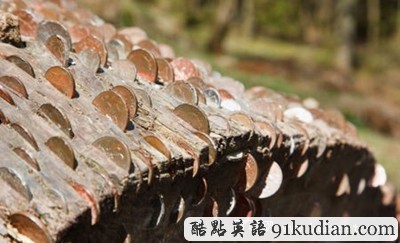
They say money doesn't grow on trees. But it certainly appears to do so.
據(jù)英國(guó)《每日郵報(bào)》9月13日?qǐng)?bào)道,俗話說(shuō),錢不會(huì)從樹上長(zhǎng)出來(lái),但現(xiàn)在這種事似乎也成真了。
Actually, these old trees with coins embedded all over their bark dotted around the UK's woodland. There are seven tree trunks with coins pushed into them in Wales.
事實(shí)是,在英國(guó)的森林里,到處可見樹皮上鑲滿了硬幣的老樹。在威爾士,也有7棵鑲著硬幣的樹。
Meurig Jones, an estate manager at the tourist destination, says he believes they are being used as "wishing trees".
旅游景區(qū)房地產(chǎn)經(jīng)理人邁里格?瓊斯認(rèn)為這些樹是“許愿樹”。
From centuries ago, the coins were usually knocked into felled tree trunks using stones by passers-by, who hoped it will bring them good fortune.
幾個(gè)世紀(jì)之前,路人用石頭將這些硬幣砸入倒下的樹干中,希望能帶給他們好運(yùn)。
He said that a sick person could press a coin into a tree and their illness would go away.
他說(shuō),人們通過(guò)往樹里戳硬幣來(lái)驅(qū)趕疾病。
"If someone then takes the coin out though, it's said they then become ill," Jones added.
“據(jù)說(shuō),如果人們?cè)賹淅锏挠矌湃〕鰜?lái),那么他就會(huì)生病,” 瓊斯補(bǔ)充道。
It used to be believed that divine spirits lived in trees, and tradition of making offerings to deities at wishing trees dates back hundreds of years, but this combination of the man-made and the natural is far rarer.
以前人們認(rèn)為神靈會(huì)居住在樹里。為許愿樹里的神靈獻(xiàn)上貢品的傳統(tǒng)可以追溯到幾百年前,但是這種人為與自然組合的方式卻實(shí)屬罕見。
《大千世界:英國(guó)驚現(xiàn)數(shù)棵"搖錢樹"》永久閱讀地址: http://m.jiazhineng.cn/yingyu/4081/
已有0條評(píng)論,點(diǎn)擊查看發(fā)表評(píng)論